Harnessing behavioural approaches against corruption
Harnessing behavioural approaches against corruption
Social norms and behaviour change (SNBC) approaches are a promising complement to conventional anti-corruption strategies. Adopting a context-sensitive and nuanced approach is an essential ingredient for success.
Схема на раздела
-
December 2023
Harnessing behavioural approaches against corruption
Social norms and behaviour change (SNBC) approaches are a promising complement to conventional anti-corruption strategies. Adopting a context-sensitive and nuanced approach is an essential ingredient for success.
What’s the problem?
- Many anti-corruption approaches fail to address the social norms and behaviours that make corruption acceptable or expected.
- Behavioural approaches could fill that gap – but they are not widely used.
- In addition, anti-corruption interventions that seek to change social norms and behaviours can be challenging to get right. In some cases, they have been shown to be counterproductive.
- Rigorous analysis of past behavioural anti-corruption interventions can help us to better understand their use and implement successful interventions more widely.
What we did
- A review of research from 2016–2022 on the use of behavioural approaches in anti-corruption practice.
- An analysis of our practical experience designing and piloting an intervention to tackle social norms of reciprocity which fuel bribery in health facilities in Tanzania.
Why?
To understand if and how behavioural approaches can promote anti-corruption outcomes, as well as conditions for success.
What we found
Here are 11 success factors for behavioural approaches learned from the research review and our pilot project in Tanzania:
- Socially sensitive messaging
Giving gifts to show gratitude is a socially accepted practice in Tanzania. This nuance was taken into account when formulating the message. - The messenger matters
The main messengers were “anti-corruption champions” recruited from health facility staff. We involved the Medical Association of Tanzania and the hospital management in the intervention. - Positive framing
The messages encouraging health service providers to refuse unsolicited gifts appealed to their professional ethics. Emphasising ethics and integrity is more effective than encouraging people not to engage in corruption because it is “bad” or “evil”. - Narrow targeting
The pilot intervention targeted hospital users (patients and their families) and health workers (doctors and nurses) at one hospital in Dar es Salaam. - Narrow scope
The intervention was narrow in scope and focused on addressing the social norms of reciprocity that fuel bribery in health facilities – one important step in a wider aim to curb corruption in health facilities. - Leveraging social networks
Social networks play an important role in shaping behaviours. The anti-corruption champions spread the messages at staff meetings and through personal conversations, encouraging colleagues to refuse gifts. - Targeting concrete patterns of corruption
Based on extensive research, we targeted the specific pattern of corruption of unsolicited gift giving by patients seeking to jump the queue or obtain other privileges. - Relevant to the (social) context
A 2016 crackdown on bribery changed the perceptions of health workers. While they continued to receive unsolicited gifts, the likelihood of detection and punishment for bribery had increased. This contextual change provided the anchor for an intervention. - Based on clear pathways of change
Developing a theory of change was a critical component of the intervention. Why, how and where should change occur? This theory formed the basis for measuring impact. - Making it easy
Posters and desk signs advised patients that the hospital staff do not accept bribes. The side of the desk sign facing the hospital staff included guidance on how to tactfully refuse unsolicited gifts. - Making it sustainable
To make the intervention more impactful and sustainable, anti-corruption champions among the health workers shared information about the wider negative impact of accepting gifts.
Main takeaways
Practitioners interested in developing behavioural anti-corruption interventions are advised to:
- Assess whether an SNBC approach is appropriate to address the corruption problem. Is it relevant and feasible in this context?
- Identify the specific corrupt behaviours that should be addressed and identify contextual factors that may shape the approach.
- Develop a theory of change that proposes a concrete path to change.
- Monitor and evaluate the outcomes of the intervention. This helps strengthen the evidence base on what works and which pitfalls to avoid.
Why it matters
- Donors and anti-corruption practitioners can use the analysis to design more effective anti-corruption interventions.
- Practitioners implementing such approaches can use the framework to better monitor and evaluate the success of their initiatives and share lessons learned with the anticorruption community.
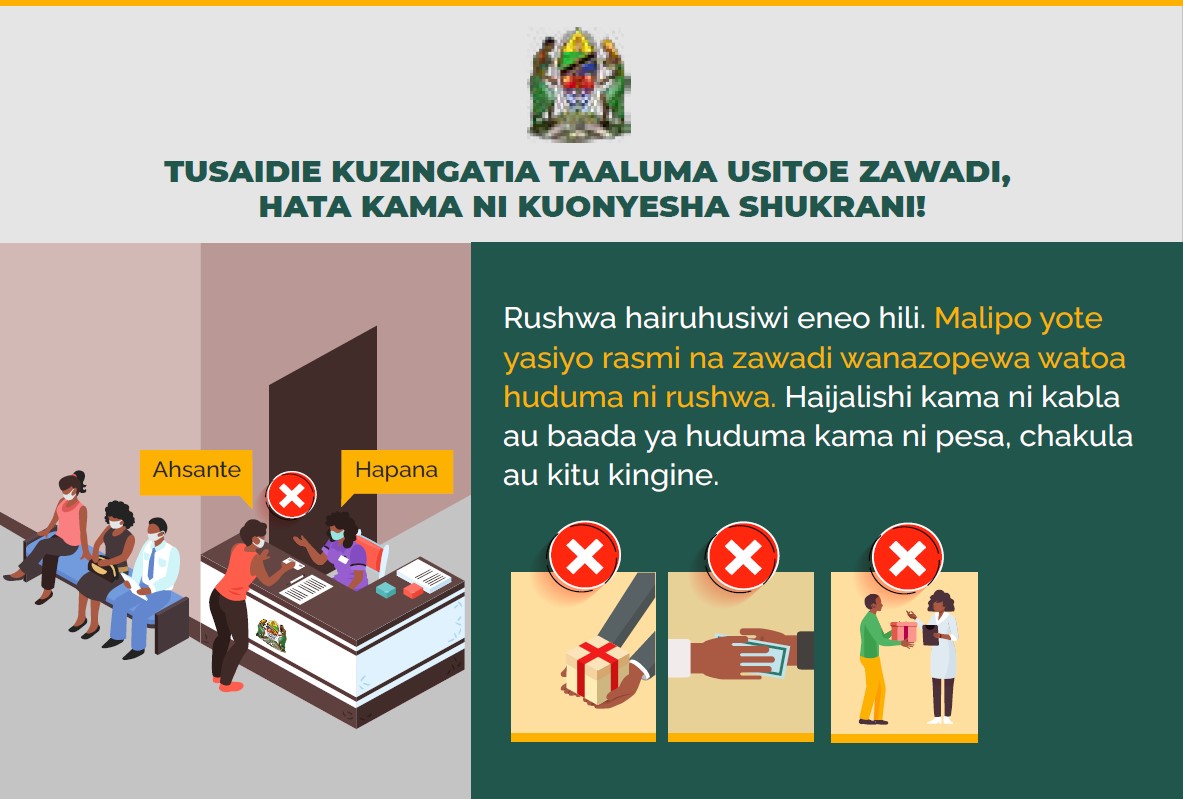
Posters placed in the hospital sought to challenge social norms around gift giving.
Where to learn more
- Stahl, C. 2022. Behavioural insights and anti-corruption: A practitioner-tailored review of the latest evidence (2016–2022)
- Baez Camargo, C. 2022. Working Paper 40: Developing anti-corruption interventions addressing social norms – Lessons from a field pilot in Tanzania
- Baez Camargo, C. and J. Schönberg. 2023. Working Paper 45: Guidance on complementing conventional anti-corruption measures by adopting a behavioural communications approach
About this Research Case Study
The reports were supported by the Deutsche Gesellschaft für Internationale Zusammenarbeit (GIZ) GmbH on behalf of the Federal Ministry for Economic Cooperation and Development (BMZ). The contents of this publication do not represent the official position of either BMZ or GIZ.
The pilot intervention that serves as the basis for most of the reflections included in Working Paper 40 was funded by the Global Integrity Anti-Corruption Evidence Programme (GI-ACE), funded with UK aid from the UK government.
This publication is part of the Basel Institute on Governance Research Case Study series. It is licensed for sharing under a Creative Commons Attribution-NonCommercial-NoDerivatives 4.0 International License (CC BY-NC-ND 4.0).
Suggested citation: Baez Camargo, Claudia, and Saba Kassa. 2023. ‘Harnessing behavioural approaches against corruption.’ Research Case Study 5, Basel Institute on Governance. Available at: baselgovernance.org/publications/research-case-5.
Keywords
- informal networks
- anti-corruption
- social norms
- behavioural research
- anti-corruption messaging