Case Study 11
Case Study 11
Contur secțiune
-
November 2025
International cooperation in the Migori County corruption case
How Kenya obtained crucial overseas intelligence in a corruption case through the International Anti-Corruption Coordination Centre, leading to the recovery of USD 1.8 million in assets for the Kenyan people.
Authors: Basel Institute on Governance, Ethics and Anti-Corruption Commission (Kenya), International Anti-Corruption Coordination Centre
 Key points
- Kenya’s Ethics and Anti-Corruption Commission (EACC) established that between 2013 and 2017, around KES 2 billion (USD 15.5 million) was embezzled from the County Government of Migori in southwest Kenya through unlawful and irregular procurement contracts. The money was spent on property, high-end vehicles and university tuition fees for the former County Governor’s children.
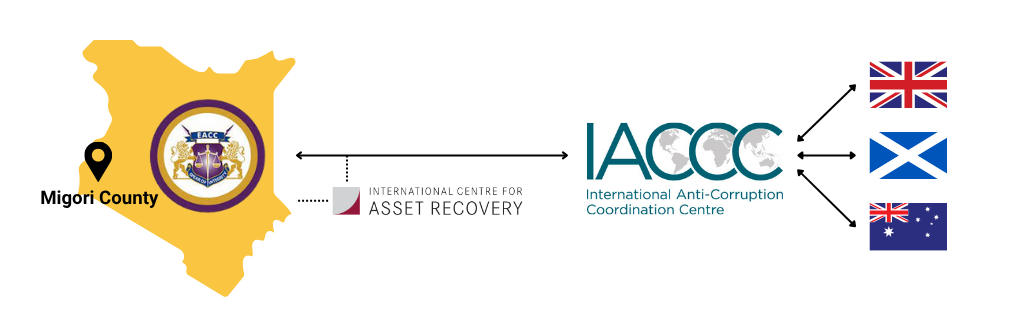
- Through the International Anti-Corruption Coordination Centre (IACCC), the EACC obtained crucial intelligence on the suspect’s assets, travels and purchases in several jurisdictions.
- This enabled the EACC to prepare and submit precise mutual legal assistance requests, with the assistance of a mentor from the Basel Institute’s International Centre for Asset Recovery (ICAR).
- The end result was timely evidence collection and an out-of-court settlement worth KES 235.6 million (USD 1.8 million) in property and vehicles. The assets will be liquidated and ultimately returned to the Kenyan treasury.
- The case highlights the value of the IACCC as a mechanism for efficient and coordinated international cooperation in grand corruption investigations, and the benefits of ICAR’s case-based technical assistance in complex, cross-border corruption cases.
The case
A scheme of proxies and shell companies
- Between 2013 and 2017, the County Government of Migori awarded multiple high-value procurement contracts to 16 companies linked to only a handful of individuals. These were known proxies of the Governor of Migori County at the time, Okoth Obado.
- Investigators established that KES 2 billion (USD 15.5 million) had been siphoned from the public treasury through these irregular contracts.
Early investigations in Kenya
- In July 2017, following intelligence reports, the EACC obtained temporary freezing orders over six Nairobi apartments, one townhouse and 60 plots of land in Migori. These properties were suspected to have been acquired with embezzled funds.
- A suspicious fire at the Migori County procurement office on the deadline for producing key documents complicated the investigation. Despite the setback, the EACC secured extensions on the freezing orders and gathered additional records from land, company, tax and person registries.
- In 2018, officers searched the residences and office of the County Governor and his main proxy and conducted detailed financial investigations into the 16 companies. These were given the opportunity to substantiate each tender awarded by the County Government, but were unable to provide an adequate explanation.
- In 2018, the EACC initiated proceedings under the Anti-Corruption and Economic Crimes Act, 2003 to prove that the income received by the companies far exceeded the suspect’s legitimate income.
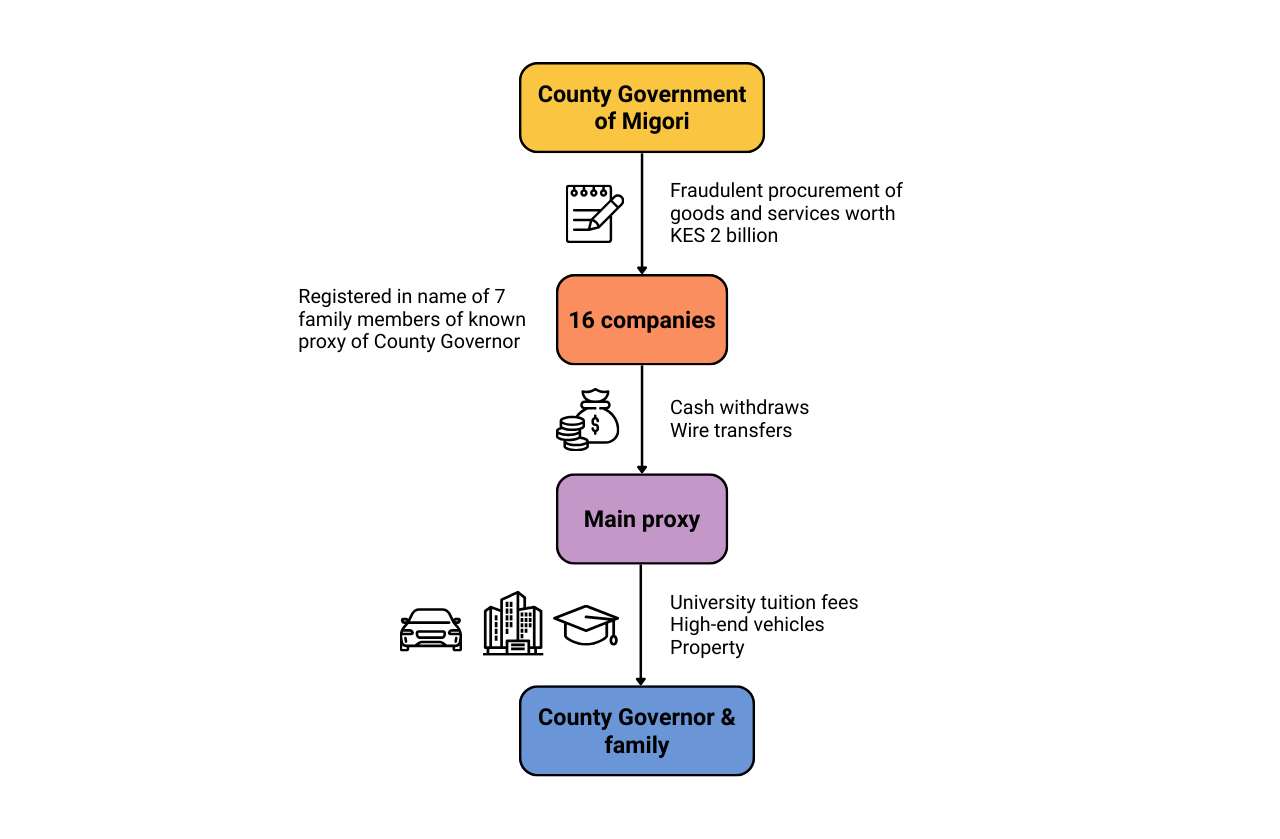
Figure 1: The KES 2 billion corruption scheme.Seeking information from overseas
- Recognising the international dimension of the case, in May 2018 the EACC sought assistance from the IACCC. The request covered overseas bank accounts, travel records, educational institutions and property purchases linked to Obado, his children and associates. The request included a short overview of the investigation, including the alleged offences and suspected links to other jurisdictions.
- The IACCC received the request in late May 2018 and assigned it to a specific IACCC officer. The officer requested and received additional details for the suspects, such as dates of birth. The IACCC then commenced intelligence gathering across the member agencies and in addition collected open-source intelligence.
- The IACCC’s first intelligence report, sent to the EACC in July 2018, indicated that Obado had a nexus to Australia. Among other things, it provided information about financial products held by associates that had been used to purchase property.
- A second intelligence report, sent in August 2018, demonstrated links to the UK, including relevant UK and international bank accounts.
- The responses allowed the Commission to demonstrate the overseas travel undertaken by Obado and his children, and the large amounts of cash exchanged during their stay in the foreign countries. Further, information received from England and Wales revealed other children of Obado who received cash transfers from the known proxies. The two intelligence reports thus not only confirmed existing suspicions but also revealed new investigative leads.
Building a strong case
- Armed with this information, together with the ICAR advisor, the EACC drafted targeted mutual legal assistance (MLA) requests to obtain formal evidence that could be used in court. The requested jurisdictions responded quickly during 2019 and 2020, providing admissible evidence from banks, universities and a property company.
- This evidence ultimately enabled the EACC to negotiate an out-of-court settlement worth KES 235.6 million, including eight properties and two vehicles purchased abroad.
- Once sold, the proceeds will be paid into Kenya’s Consolidated Fund and ultimately returned to the public treasury.
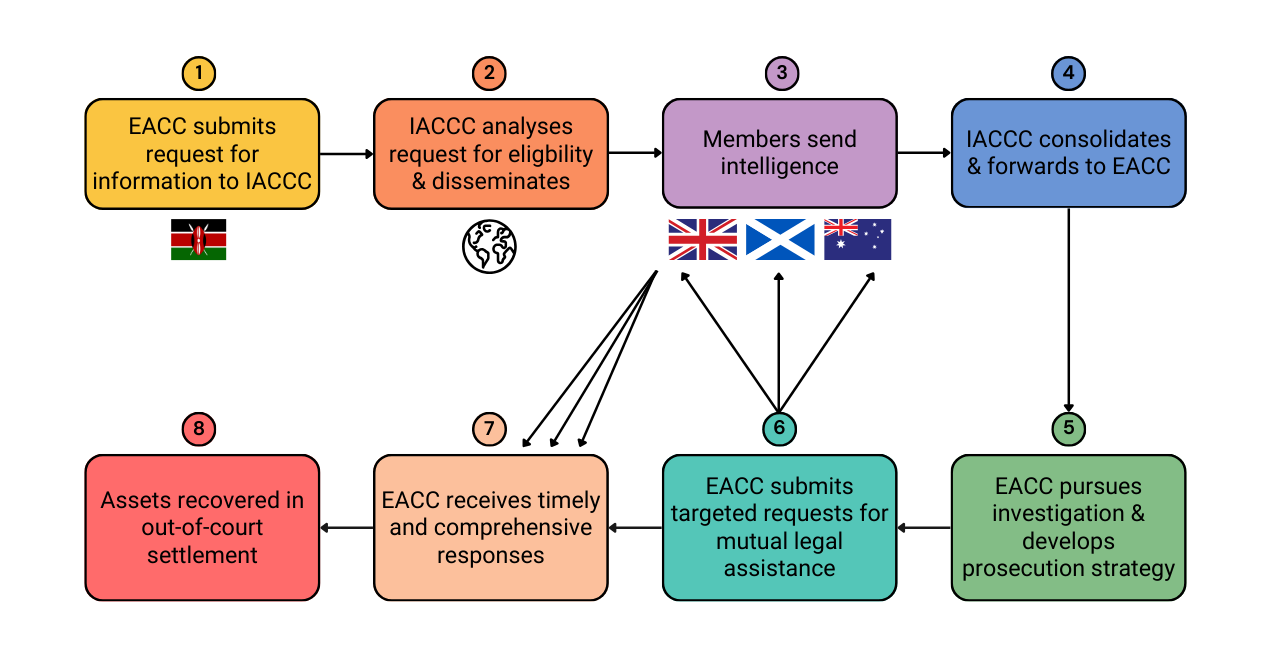
Figure 2: Obtaining information and evidence via the IACCC: how it worked.
What can we learn from this case?
The IACCC can deliver fast, actionable intelligence
This case demonstrates the IACCC’s ability to streamline international cooperation in grand corruption cases. Instead of sending multiple requests to different jurisdictions, the EACC submitted one consolidated request for intelligence. The IACCC coordinated responses, saving time and effort, while uncovering additional leads.
For EACC officers, this intelligence was critical in drafting precise mutual legal assistance requests that secured usable evidence.
The EACC explained:
“This collaboration enabled the Commission to enhance the information it sought through mutual legal assistance requests and raise questions that were concise and to the point. The responses illustrated the overseas travel by the suspect and his family and revealed significant exchanges of cash. Without this support, our investigation would have faced lengthy delays and weaker evidence.”
Intelligence coordination can speed up mutual legal assistance
Financial centres often receive numerous mutual legal assistance requests in corruption and asset recovery cases – formal requests for evidence or the execution of another jurisdiction’s confiscation orders relating to assets held abroad.
The IACCC’s model of coordinated intelligence gathering can improve the efficiency of the MLA process by laying the groundwork and providing assurance.
An IACCC representative explained:
“The intelligence provided by the IACCC allowed the EACC to request very specifically the information sought as evidence through mutual legal assistance requests to Australia, England and Wales, and Scotland. As a result, the Central Authorities of these jurisdictions understood that the necessary informal enquiries had been conducted, resulting in precise and proportionate requests. This facilitated a prompt review of the requests and then execution.”
Technical assistance is crucial for asset recovery
Transnational corruption investigations are complex, requiring analysis of financial flows, assets and their beneficial owners across multiple jurisdictions. Technical support and mentoring can make the difference between stalled cases and successful recoveries.
In the Migori case, an ICAR advisor provided hands-on support to advance intelligence gathering and the international cooperation process.
Such assistance and related training help not only to advance complex cases, but to build the capacity of law enforcement and prosecutorial agencies to tackle future cases more independently.
Simon Marsh, Head of Africa ICAR, reflected:
“It isn’t easy to investigate complex corruption cases, particularly in a world where financial movements take place at the touch of a button. Utilising the resources and expertise available is pivotal in facing up to this challenge and demonstrating that it is possible to effectively investigate and recover stolen assets. And once agencies gain experience, connections and a track record, they can more effectively and independently go after those assets – even when they’re located abroad.”
Combined with innovative international cooperation mechanisms such as the IACCC and proactive support from the competent authorities of requested jurisdictions, ICAR’s model of embedding advisors within anticorruption institutions such as the EACC proves highly effective.
This approach helps achieve success in complex multijurisdictional cases and reduce impunity for grand corruption.
Keywords
- Kenya
- Australia
- United Kingdom
- Embezzlement
- Asset recovery
- International cooperation
- Mutual legal assistance
About this Case Study
This publication is part of the Basel Institute on Governance Case Study series, ISSN 2813-3900. It is licensed for sharing under a Creative Commons Attribution-NonCommercial-NoDerivatives 4.0 International License (CC BY-NC-ND 4.0).
It is a publication of the International Centre for Asset Recovery (ICAR) at the Basel Institute on Governance. ICAR receives core funding from the Governments of Jersey, Liechtenstein, Norway, Switzerland and the UK.
While we have made reasonable efforts to ensure the accuracy of information provided in this Case Study, neither the authors nor the Basel Institute’s donors and partners assume any responsibility or liability for any errors or omissions.
Suggested citation: Basel Institute on Governance, Ethics and Anti-Corruption Commission (Kenya) and International Anti-Corruption Coordination Centre. 2025. “International cooperation in the Migori County corruption case.” Case Study 11, Basel Institute on Governance. Available at: https://baselgovernance.org/publications/cs-11.
Learn more
About the Ethics and Anti-Corruption Commission (EACC)
The EACC is Kenya’s anti-corruption agency, mandated to combat and prevent corruption, economic crime and unethical conduct in Kenya through law enforcement, prevention, public education, promotion of standards and practices of integrity, ethics and anti-corruption.
Its mandate extends to instituting proceedings seeking the forfeiture of unexplained assets and to engaging in mutual legal assistance in this regard.
Between 2018 and 2024, the Commission recovered assets (cash, movable and immovable) worth approximately KES 28 billion (USD 215 million). Similarly, the Commission, through proactive investigations, disrupted corruption schemes, thereby averting a loss of approximately KES 42 billion (USD 323 million). As of 2025, the EACC is pursuing forfeiture of corruptly acquired assets worth approximately KES 50 billion (USD 385 million).
More information: eacc.go.ke
About the International Anti-Corruption Coordination Centre (IACCC)
The IACCC is an international, multi-agency team of investigators and intelligence analysts that provides dedicated operational support to grand corruption investigations. Any law enforcement agency or prosecuting authority in the world can refer a case to the IACCC for operational assistance, while still maintaining control of its own investigation.
Members of the IACCC deploy an officer to the IACCC office in London. Full law enforcement agency members represent Australia, Canada, France, the Netherlands, New Zealand, Singapore, the USA and the UK. The IACCC also counts 18 associate members and observers representing other significant financial centres, and cooperates with Interpol.
Between its launch in 2017 and May 2025 the IACCC has, among others, contributed to the identification of GBP 1.8 billion in suspected stolen assets, the freezing of GBP 641 million in IACCC-supported cases and the confiscation or forfeiture of GBP 70 million. It has shared around 200 consolidated intelligence reports and assisted with 114 mutual legal assistance requests.
More information: nationalcrimeagency.gov.uk/iaccc